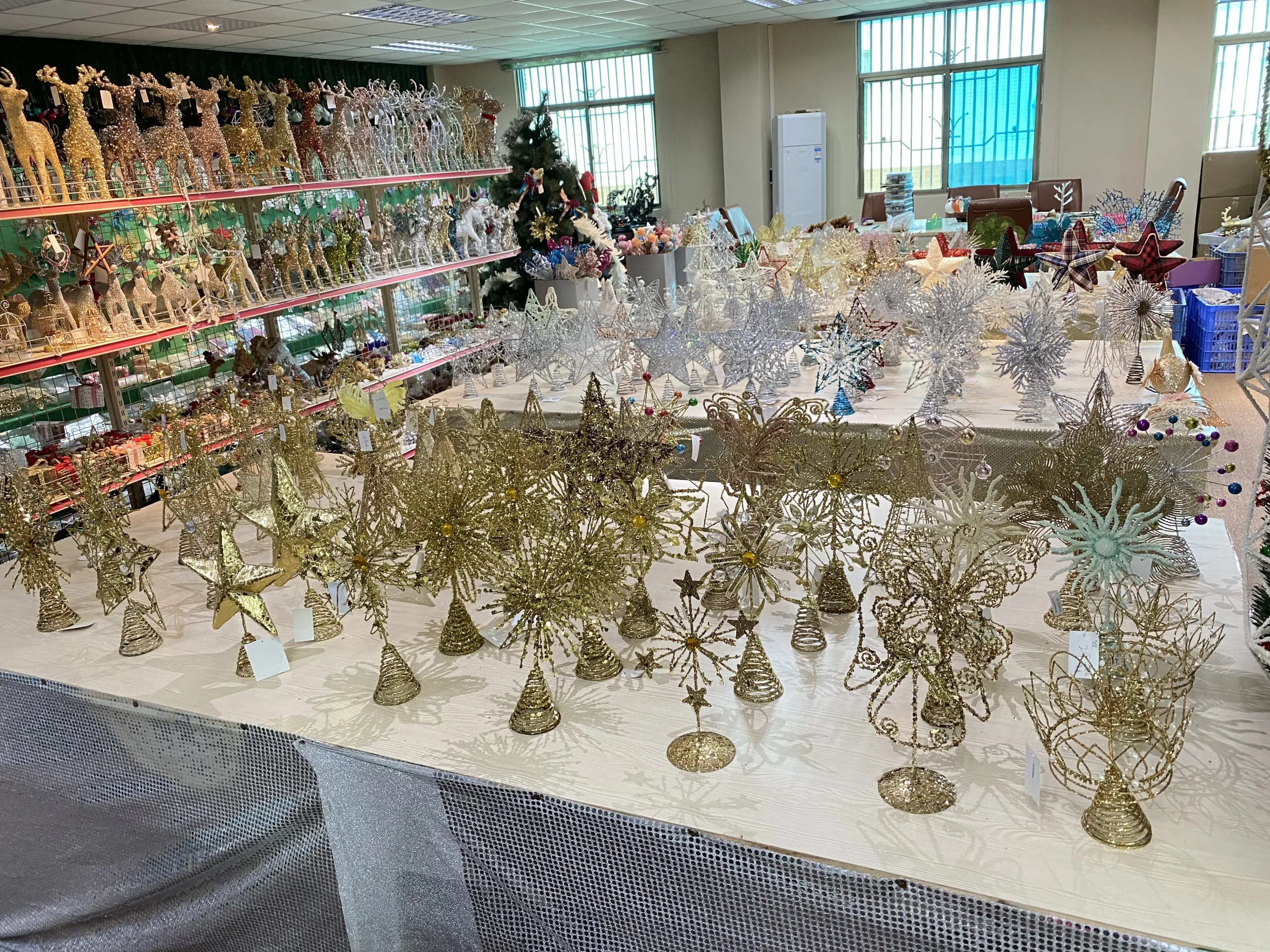
When you run a retail store, Christmas balls are never just “balls.” They are the SKUs that either fly off shelves in November or sit in your stockroom until January clearance. After 29 years of manufacturing Christmas ornaments for retailers like Walmart, Hobby Lobby, TJ Maxx, and Costco, we’ve seen what sells and what doesn’t.
This guide covers what you actually need to know before placing a wholesale Christmas ball order: materials, sizes, color planning, and how to work directly with a factory to protect your margins.】

1. Why “Cheap” Christmas Balls Can Cost You More
Most importers learn this the hard way. A container of low-cost glass balls arrives in October. By the time it reaches distribution centers, 15% are broken. Returns spike. Margins erode.
Shatterproof plastic balls solve this. They survive shipping, survive clumsy stockroom handling, and survive customers with young children and pets. The key is understanding what “shatterproof” actually means in manufacturing terms.
Not all shatterproof balls are equal. The difference comes down to:
- Material density: Higher-density plastic holds its shape better and resists crushing.
- Wall thickness: Thinner walls save cost but dent easily during bulk packing.
- Surface adhesion: How well the finish (glitter, matte coating, metallic) bonds to the plastic shell. Poor adhesion means glitter all over your customer’s floor.
As a factory that produces plastic foam Christmas balls in-house, we control the entire process from raw material to finished product. This means we don’t rely on outside suppliers for semi-finished shells, which is where quality inconsistencies often start.
2. Plastic vs. Glass Christmas Balls: What Retailers Should Know
| Factor | Shatterproof Plastic | Glass |
|---|---|---|
| Breakage during shipping | Under 0.5% if packed correctly | 5-15% typical |
| Weight | Lighter, lower freight cost | Heavier, higher freight cost |
| Finish options | Glitter, matte, glossy, metallic, iridescent | Glossy, matte, mercury glass |
| Price point | Lower unit cost, higher perceived value per dollar | Premium positioning |
| Lifespan | Indefinite in normal use | Fragile, single-season risk |
| Customization | Easier to print, coat, and shape | Limited without cost increases |
For big-box chains like Walmart and Asda, the math favors shatterproof. The lower breakage rate alone can mean thousands of dollars saved per container. For specialty retailers and garden centers like Hobby Lobby, plastic allows a wider range of finishes and sizes at price points that keep inventory turning.
3. Sizing Strategy: The Numbers That Actually Sell
After supplying retailers across the US, UK, Canada, and Australia for nearly three decades, here’s what the order data shows:
The “Starter Mix” That Works:
- 6 cm balls – Filler for wreaths, garlands, small trees. High volume, low per-unit cost.
- 8 cm balls – The workhorse. Sells in multi-packs.
- 10 cm balls – Statement pieces. Higher perceived value, good margin.
By Retailer Type:
- Discount chains (TJ Maxx type): Heavy on 6-8 cm multi-packs.
- Craft stores (Hobby Lobby type): Even mix of all sizes, with specialty finishes.
- Department stores (Macy’s type): Leans toward 8-10 cm in curated color stories.
You don’t need to guess your mix. When you work with a factory that has been doing this since 1997, they can recommend ratios based on what’s moving in your market right now.
4. Finish Trends That Matter in 2026
Every year, retail buyers ask the same question: “What’s new?”
For the upcoming season, here’s what’s gaining traction:
Matte finishes – Moving away from high-gloss, matte balls in muted tones (sage, dusty blue, terracotta) are growing. They photograph well and appeal to younger consumers.
Iridescent – A pearl-like coating that shifts color under different light. Works as a premium tier item.
Textured glitter – Not just surface-dusted glitter, but embedded glitter that doesn’t shed. This requires factory-level control over the coating process.
Two-tone – Half matte, half metallic. Requires precision masking during production.
For retailers serving religious or traditional markets, classic red, gold, and green in glossy finish still dominate. The key is offering at least one “trend” finish per season to signal freshness.
If you have a specific color direction, working with a factory that has an in-house R&D team (ours is 10 people dedicated to sample development) means you can get custom color matches, not just picking from a catalog.
5. Customization: When Does It Make Sense?
Private-label Christmas balls with your branding or custom packaging can differentiate you from Amazon and big-box competitors. But it only makes sense at certain volumes.
What’s possible:
- Custom colors matched to your Pantone specifications
- Custom finishes (specific glitter density, matte level)
- Printed logos on the ball surface
- Custom packaging: your brand on the box, barcode, hang tag
When to consider it:
- Your order exceeds 5,000-10,000 pieces per SKU (MOQ varies by complexity)
- You have a strong brand identity that customers recognize
- You’re competing against undifferentiated imports and need a point of difference
For smaller retailers, the smarter approach is often semi-custom: pick from existing molds and finishes, but request custom packaging. This keeps tooling costs at zero while still putting your name in front of the customer.
6. The Production Process: What Happens Inside a Christmas Ball Factory
Knowing how your product is made helps you ask the right questions and avoid surprises. Here’s the actual flow inside a dedicated Christmas decoration factory:
Step 1: Raw material preparation
Plastic foam material is sourced and stored in our independent raw material storage area. For a factory with 30,000 square meters of space (25,000 square meters just for production), material handling is a major operation.
Step 2: Shell forming
Balls are shaped to precise diameters. Consistency matters because a 7.8 cm ball won’t fit an 8 cm packaging insert.
Step 3: Surface treatment
This is where finishes happen: matte coating, glitter application, metallic spraying. Each finish type has its own area in the workshop.
Step 4: Manual painting (when needed)
Some finishes, like hand-painted details, can’t be automated. A workforce of 230 staff, including skilled painters, handles this.
Step 5: Assembly
For balls with caps, hangers, or attached decorations, this is the assembly line.
Step 6: Quality check
Each batch is inspected before packaging. For large orders headed to Macy’s or Costco, AQL (Acceptable Quality Level) standards are followed strictly.
Step 7: Packaging
Bulk pack for retail distribution or individual boxed packaging for shelf-ready display. The factory has a dedicated product packaging area.
Understanding this flow helps explain lead times. A standard order with existing molds takes 30-45 days. Custom colors or new packaging add 15-20 days. Completely new designs with sample development can take 60+ days. Plan your buying calendar backward from your in-store date, usually August for the Christmas season.
7. Shipping and Logistics: What Affects Your Landed Cost
Christmas balls are bulky relative to their weight. Shipping cost can be a larger percentage of total cost than the product itself if you don’t plan properly.
Factors that matter:
- Carton optimization: A well-designed carton packs more balls per cubic meter, directly lowering freight cost per unit. Our factory designs packaging with container efficiency in mind, not just shelf appeal.
- Container loading: 20-foot vs. 40-foot containers. If you’re mixing Christmas balls with other decorations (deer figurines, floral picks, butterflies, cone trees), a 40HQ maximizes value.
- Port of destination: Shipping to LA/Long Beach is different from Felixstowe or Sydney. Lead time calculations must include port congestion risk.
For new importers, ask your factory for the carton dimensions and quantities before confirming your order. Run the numbers on a freight calculator. If you’re working with a forwarder, share the packing list early.
Our factory’s finished goods warehouse is designed to hold completed orders while coordinating with your freight forwarder’s pickup schedule. This flexibility helps when shipping dates shift.
8. Working Directly with a Factory: What to Expect
If you’ve only bought through trading companies or B2B platforms, going direct to a manufacturer can save 15-25% on unit cost. But it requires a different approach.
Questions to ask a Christmas ball factory before committing:
- “Can I see photos of your production line?” (Not just the showroom.)
- “What’s your current customer list?” (You’re looking for names you recognize.)
- “How do you handle quality disputes?” (A clear process is a good sign.)
- “Can you do custom colors or only your existing catalog?”
- “What’s the minimum order quantity per design and per container?”
A factory with long-term relationships with Walmart, Hobby Lobby, At Home, and Macy’s has passed extensive factory audits. These retailers don’t work with manufacturers that cut corners on safety, quality, or labor standards.
Sample policy is critical. Before placing a bulk order, always request pre-production samples. Expect to pay for the sample and courier shipping, but this step prevents costly mistakes. For custom items, approve the sample in writing before the factory starts full production.
Communication expectations:
Most Chinese factories communicate in written English via email or WeChat. Be specific. Instead of “I want red balls,” say “I need 8cm matte red balls, Pantone 186C, shatterproof plastic, 12 pcs per inner box, 144 pcs per carton.” Specificity prevents errors.
9. A Real Example: The Walmart Supply Chain Standard
Walmart doesn’t just buy cheap Christmas balls. They require:
- Factory audit certification
- Product testing for lead and phthalates (CPSIA compliance for US market)
- On-time delivery with financial penalties for late shipments
- Carton marking and barcode compliance
- Social compliance standards
A factory that has maintained this relationship for years has systems in place that benefit all customers, not just the big ones. The same quality control process that catches defects for Walmart catches defects for a small chain ordering 5,000 pieces.
This is the difference between a trading company that sends you whatever comes out of a random workshop, and a manufacturer with a quality management system that’s been audited repeatedly.
10. Your Next Order: A Practical Checklist
Before you request a quote, have these details ready:
- Quantities per size and finish: “5,000 pcs of 8cm matte red, 5,000 pcs of 8cm matte gold”
- Packaging preference: Bulk or individual box
- Target retail price point: Helps the factory suggest appropriate finishes
- In-store date: Work backward for production and shipping
- Certifications required: US (CPSIA), EU (CE, REACH), other
When you send a clear inquiry, you get an accurate quote faster. Factories respect prepared buyers.
Work with a Factory That’s Been Making Christmas Decorations Since 1997
Huizhou Reindeer Arts and Crafts Co., Ltd. has been producing Christmas balls and ornaments for 29 years. Our 30,000-square-meter facility in China houses the entire production process under one roof: R&D, raw material storage, manual painting, assembly, packaging, and finished goods warehousing.
We’re not a trading company. We’re the factory. Our 230-person team includes a dedicated R&D unit of 10 people who handle custom sample development, drawing interpretation, and new design creation. We accept OEM and ODM orders. Any size, any finish, any specification — we’ve probably done it before for retailers you know.
Ready to discuss your Christmas ball order?
Contact us for our wholesale catalog, current finish options, and custom sample service. We respond to inquiries within 24 hours.